What is on the page
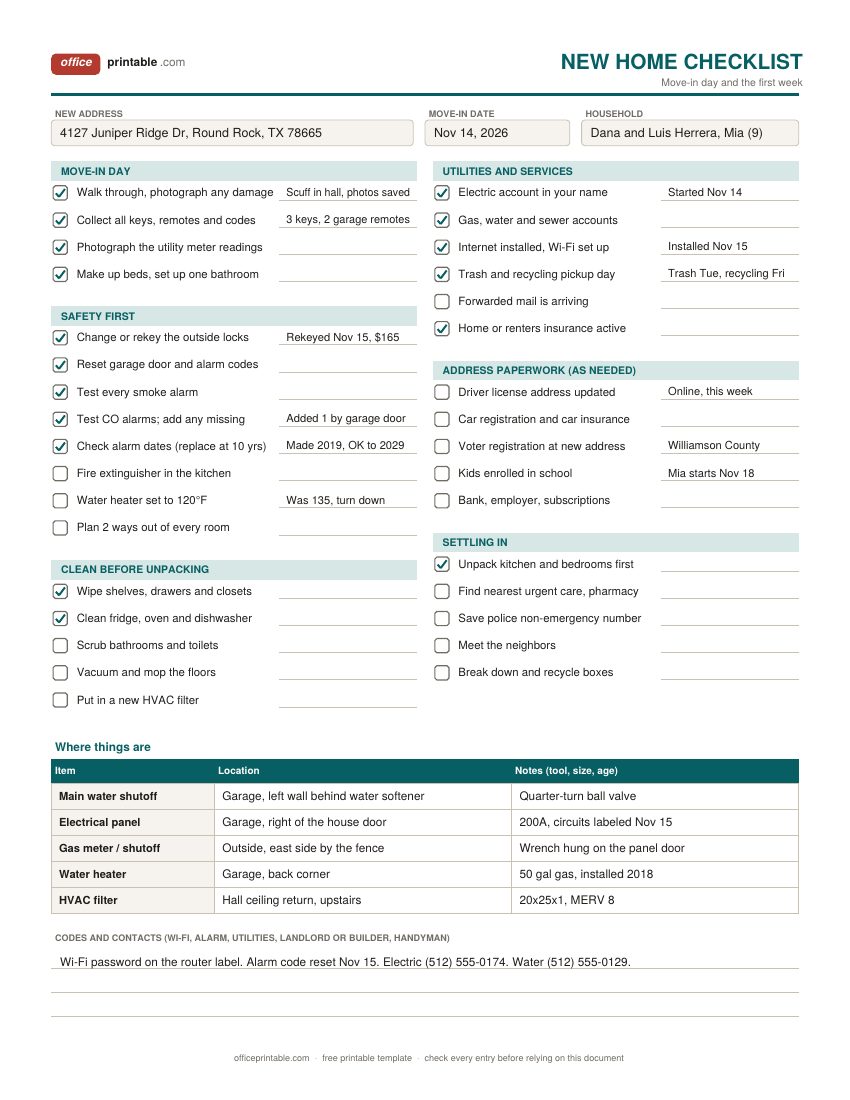
- Address, date and household
- At the top of each sheet. A dated list is easy to find again when you need to know when the locks were changed or when the alarms went in.
- Note line beside each item
- On the first week and first-year lists, a short line for a date, a cost or who did it: "rekeyed Nov 15, $165" or "file by Apr 30".
- Where things are
- The location of the main water shutoff, the electrical panel, the gas shutoff, the water heater and the HVAC filter, with the filter size and any tool you need. In a burst pipe nobody wants to go looking.
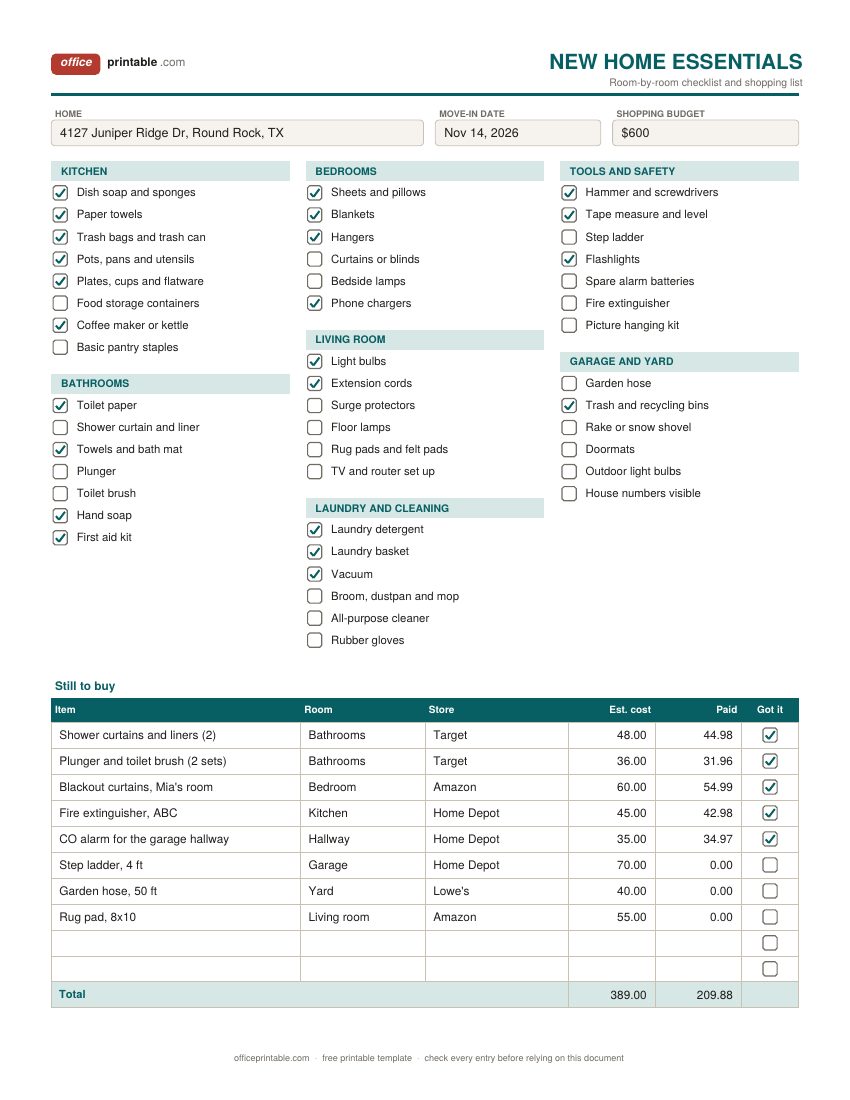
- Room-by-room essentials
- Tick boxes for what each room needs on day one, from toilet paper to a plunger to spare alarm batteries.
- Still to buy
- Item, room, store, estimated cost, what you paid and a "got it" box. The Excel version totals both money columns.
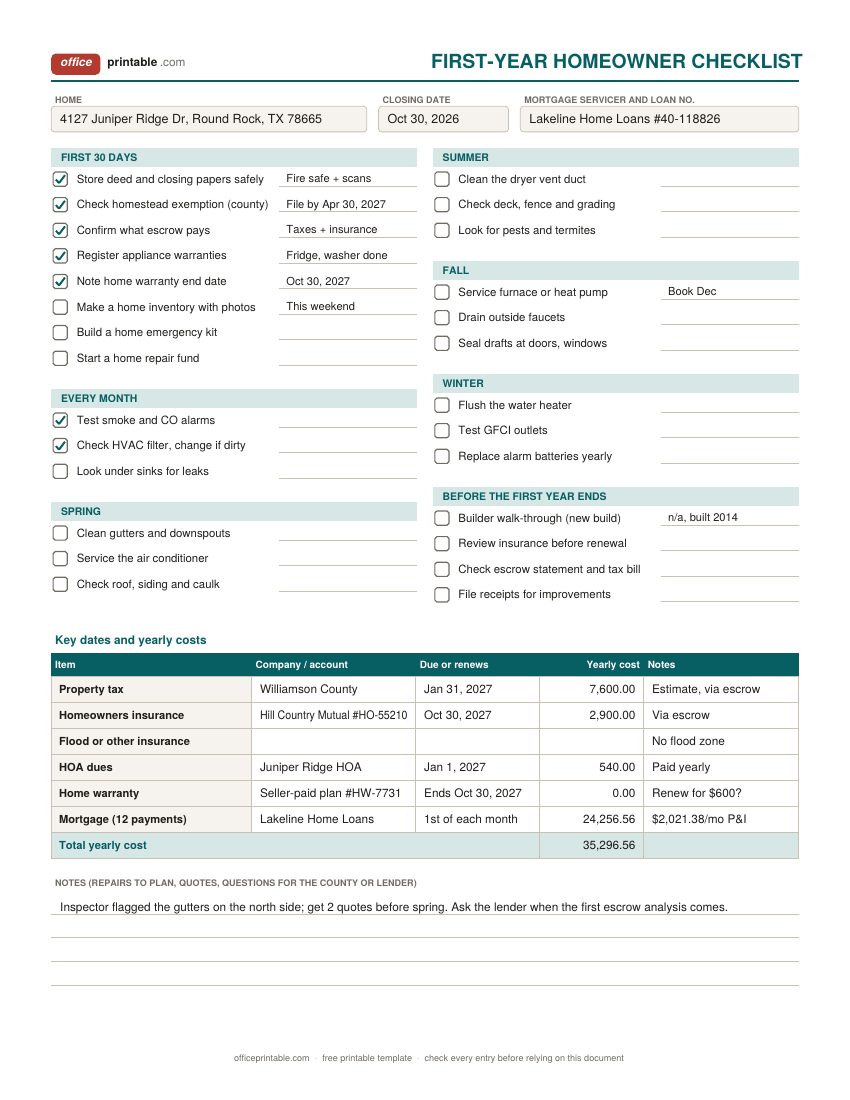
- Key dates and yearly costs
- Property tax, homeowners insurance, flood insurance, HOA dues, home warranty and mortgage, with the company, the due or renewal date and the yearly cost. Excel adds up the total.
What goes on a new home checklist
A good new home checklist covers what the moving plan leaves out: the work that starts once you have the keys. Some of it is about safety and can't wait, such as locks and smoke alarms. Some of it's about getting the house running, like power, water, internet and trash pickup. And some of it's plain shopping, because nobody packs a shower curtain liner. Owners also have first-year jobs that are easy to miss.
The sheets here split the work that way. The first week list is for the days right after the move. The essentials list goes room by room and has a shopping table. The first-year list is for buyers and runs from the first month to the first anniversary.
Moving into a new home checklist: the first week
Do the safety items on day one or day two. Next comes the stuff that makes the house livable: an electric account in your name, the gas and water on, Wi-Fi working, and the trash day written on the fridge. Clean before you unpack. Empty cabinets and closets take ten minutes to wipe out, and once your dishes and clothes are in there it becomes a whole weekend job.
Unpack the kitchen and the bedrooms first, then the bathrooms. Living rooms and spare rooms can sit in boxes for a while. Once the boxes are down to a few, fill in the "where things are" table. Walk to the main water shutoff, open the electrical panel and check the labels, find the gas meter and look at the filter size on the furnace. If a circuit isn't labeled, flip breakers with a helper and write it on the panel door.
Safety checks before the first night
Change or rekey the outside locks. You can't know how many copies of the old keys are out there, with past owners, cleaners, contractors, agents or neighbors. Rekeying keeps the hardware and swaps the pins, so it usually costs less than new locks. Reset the garage door opener codes and any alarm or keypad codes at the same time.
Then test the alarms. The U.S. Fire Administration says to test smoke alarms every month, to have them on every level of the home including the basement, inside and outside each sleeping area, and to replace the whole alarm 10 years after the date it was made. That date is printed on the back. The Consumer Product Safety Commission says carbon monoxide alarms belong on each level and outside sleeping areas, should be tested monthly, and that batteries in smoke and CO alarms should be replaced every year. If the house has gas appliances, a fireplace or an attached garage, a CO alarm matters even more.
Two quick extras. The CPSC suggests setting the water heater at 120°F to lower the risk of scalds which also saves a little energy. And sit down with everyone in the house to find two ways out of every room and pick an outside meeting spot, as the fire service recommends. The home emergency checklist has a full kit list and family plan for later.
A room-by-room move in checklist for essentials
The essentials sheet works as a move in checklist for supplies. Go room by room and tick what you already have, either packed or bought. Whatever is left goes in the "still to buy" table with a rough price and the store, so one trip covers most of it. The Excel copy totals what you planned to spend and what you actually paid which helps if moving costs are already stretching the budget. For a longer view of household spending after the move, the household budget worksheet picks up from here.
The items that get forgotten most are usually small: a plunger, a toilet brush, light bulbs, hangers, trash bags and a shower curtain. Buy those first. A first aid kit and a fire extinguisher for the kitchen belong on the first trip too.
Your first year as a new homeowner
If you bought, the closing is not quite the end of the paperwork. A first-time home buyer checklist rarely says what to keep afterward, so start there. Keep the deed, the closing disclosure, the title policy and the survey somewhere safe, with scans in a second place. You'll want them for taxes, refinancing and selling.
Next, look up the homestead exemption. Many states lower the property tax on a home you live in, but you usually have to apply, and the deadlines are strict. In Florida the application goes to the county property appraiser by March 1, and the home has to be your permanent residence by January 1 of that year. In Texas you file with the county appraisal district, the deadline is April 30 for a home you lived in on January 1, and filing is free. Other states work differently, and some have no such exemption, so check with your county assessor or appraisal district.
Then check your escrow. Many mortgages collect property tax and insurance with each payment. Know what yours covers so a tax bill doesn't surprise you. Register appliance warranties and record them on the warranty and purchase tracker, and note when any seller-paid home warranty ends. A home inventory with photos is much easier to make now, while things are still being unpacked, than after a claim.
The seasonal jobs on the sheet are a short starter set. Once you know the house, move to the full home maintenance checklist with its yearly schedule and repair log. Keep receipts for anything that counts as an improvement, such as a new roof or a new water heater. They may matter for taxes when you sell, so ask a tax professional how they apply to you.
Using the new house checklist as a renter
Most of the first week list works for renters too. Skip the lock change unless the lease and the landlord allow it, and ask the landlord to rekey instead. Walk through and photograph the condition of every room before you unpack, and send the photos or a written list to the landlord. That record helps when the security deposit is returned. Get renters insurance and set up the utilities that are in your name. The first-year sheet is for owners.
New home checklist vs. moving checklist
The moving checklist covers the eight weeks before the move: mover quotes, a moving budget, packing and a change of address list for the post office, banks and other accounts. This page picks up on move-in day. If you're still weeks away, start there and come back here when the truck is booked.
Editing the files
The PDFs are fillable, so you can tick boxes and type notes on screen, save and print. In Word every list is a table, so add a pool, a well or a septic system, or delete what doesn't apply. The Excel versions have the same lists with totals in the shopping table and the yearly cost table. More household forms are in the home planners section.
Questions
What should I do first when I move into a new home?
Safety first: change or rekey the outside locks, test the smoke and carbon monoxide alarms, and find the main water shutoff and the electrical panel. Then make sure the power, water and internet are on, and clean before you unpack.
Should I change the locks on a house I just bought?
Yes, it's a good idea. You can't know who still has a key. Rekeying is usually cheaper than buying new locks, and the existing hardware stays on the doors.
How often should smoke alarms be tested?
Once a month, according to the U.S. Fire Administration. Replace the whole alarm 10 years after the date of manufacture printed on it, or as the maker says for sealed long-life models.
What do people forget to buy for a new house?
Shower curtains and liners, a plunger, a toilet brush, light bulbs, trash bags, hangers, a step ladder and a fire extinguisher are the usual ones. The room-by-room sheet lists them.
Do I need to apply for a homestead exemption?
In many states, yes. The exemption is usually not automatic, and the deadline is often early in the year. Check with your county assessor or appraisal district for the rules where you live.
When do I update my driver license after moving?
It depends on the state. California, for example, asks you to report a new address within 10 days. Check your state DMV website, and update your voter registration at the same time.
Comments and questions
Have a question about this template, or an idea to make it better? Leave a comment.
Leave a comment