What is on the page
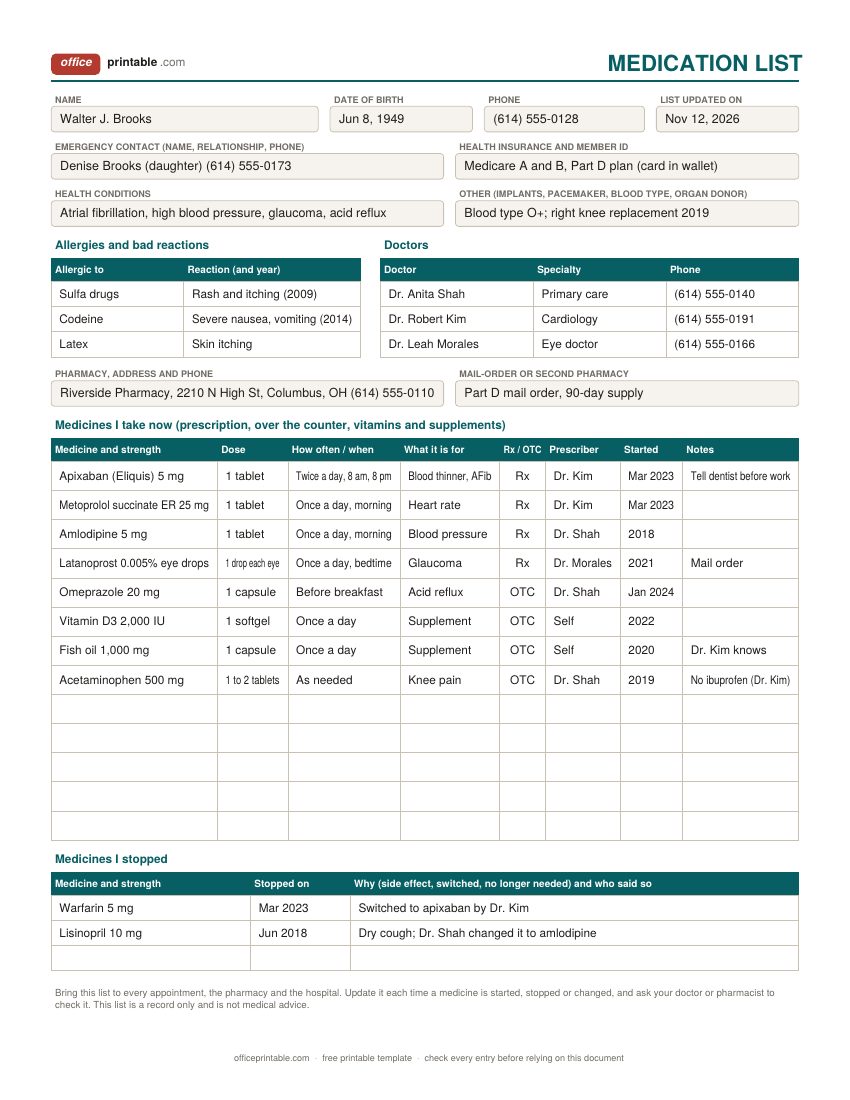
- Medicine and strength
- The name exactly as it is on the label, with the strength, such as 25 mg, 50 mcg or 0.005%. If the label shows a brand and a generic name, write both. Two medicines with different names can contain the same drug, and a list that shows both names makes that easier to spot.
- Dose and how often
- How much you take each time (1 tablet, 2 puffs, 1 drop in each eye) and how often (once a day, twice a day, at bedtime, as needed). Copy it from the label rather than from memory.
- What it is for
- The reason in plain words: blood pressure, thyroid, sleep. A doctor reading the list later can see at a glance why each medicine is there, and you will know which one to ask about.
- Rx or OTC, prescriber and pharmacy
- Whether it is a prescription or bought over the counter, who prescribed it and where it is filled. When a question comes up, you know who to call.
- Allergies and reactions
- Each drug, food or material (latex, adhesive tape) that has caused a problem, with what happened and roughly when. A rash in 2009 and trouble breathing are very different things, and staff need to know which it was.
- Updated on
- The date the list was last checked. An old list can be worse than none, so date every copy and throw out the previous ones.
What to put on a medication list template
Start with the bottles, not your memory. Gather everything in the house that you take, including things that don't feel like "real" medicine: eye drops, inhalers, creams, patches, sleep aids, antacids, vitamins, fish oil and herbal products. Then copy each one onto the list, the way it's written on the label.
The FDA suggests a list that holds each medicine's name, strength and purpose, plus when, how and how much you take, along with your allergies and emergency contacts. Our sheet has room for all of that. It also has columns for the prescriber and the start date, because those are the questions a new doctor tends to ask next. The pharmacy and its phone number go near the top, and the pharmacy can confirm what has been filled and when. If you use a mail-order pharmacy for 90-day supplies, list that one too.
Over-the-counter products and supplements matter as much as prescriptions. Some of them interact with prescription drugs, and doctors can only check for that if they know you take them. Write them on the same list, marked OTC.
Medicines you stopped
The "Medicines I stopped" section on the full-page list is easy to skip and worth filling in. If a blood pressure pill gave you a cough five years ago, a new doctor may never learn that unless it's written down, and you may be offered the same drug again. Note the date and the reason in a few words, and who made the change. Keep it short: three or four lines covers most people.
Printable medication list for your wallet or purse
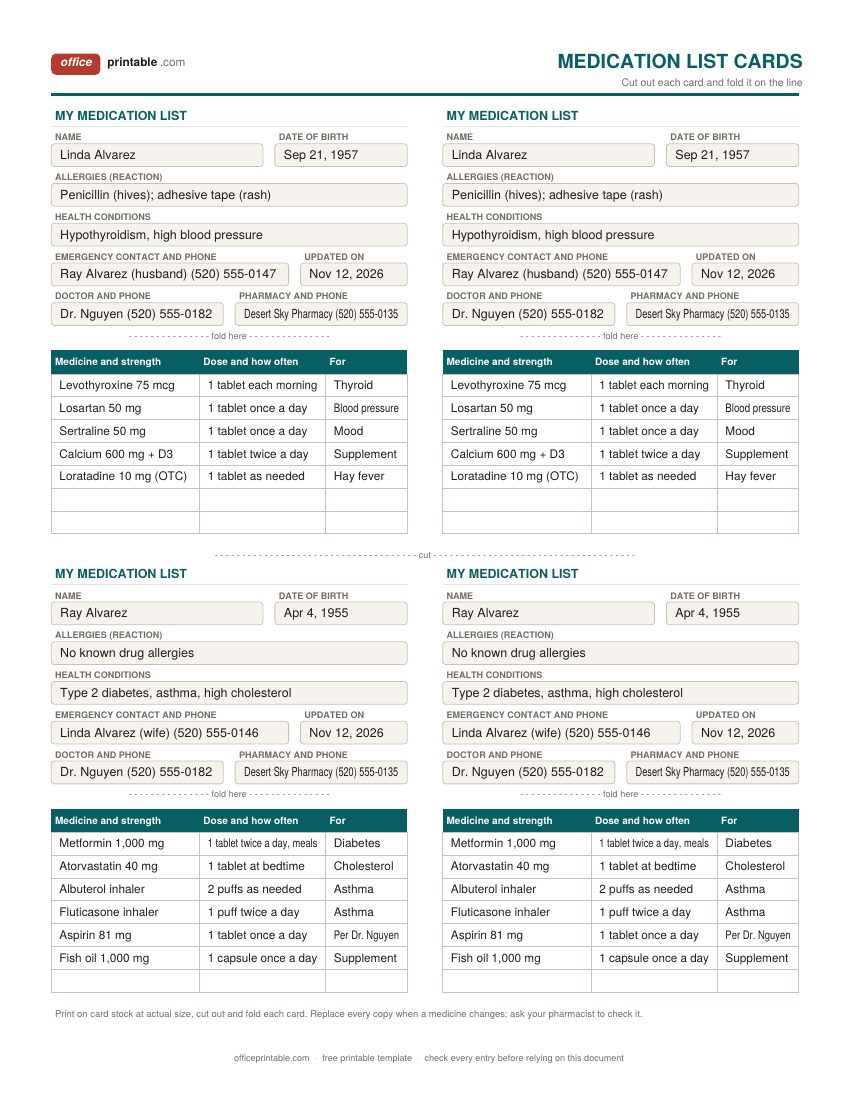
The wallet cards hold the basics on a card you can carry. The top half has your name, date of birth, allergies, conditions, an emergency contact, your doctor and your pharmacy. The bottom half lists each medicine with the dose and what it's for. Print the page on card stock, cut out each card and fold it on the line which leaves a card a bit larger than a credit card. Keep one in your wallet or purse, one in the glove box, and give one to a family member.
Put the same details on your phone as well. On an iPhone, the Medical ID in the Health app can list medicines and allergies and can be set to show on the lock screen, and most Android phones have a similar emergency information setting. A paper card still helps when the phone is dead or locked, or when the person helping you doesn't think to look. For serious allergies on their own, the allergy information card has bolder alert cards and chef cards for restaurants.
A medication list for elderly parents and caregivers
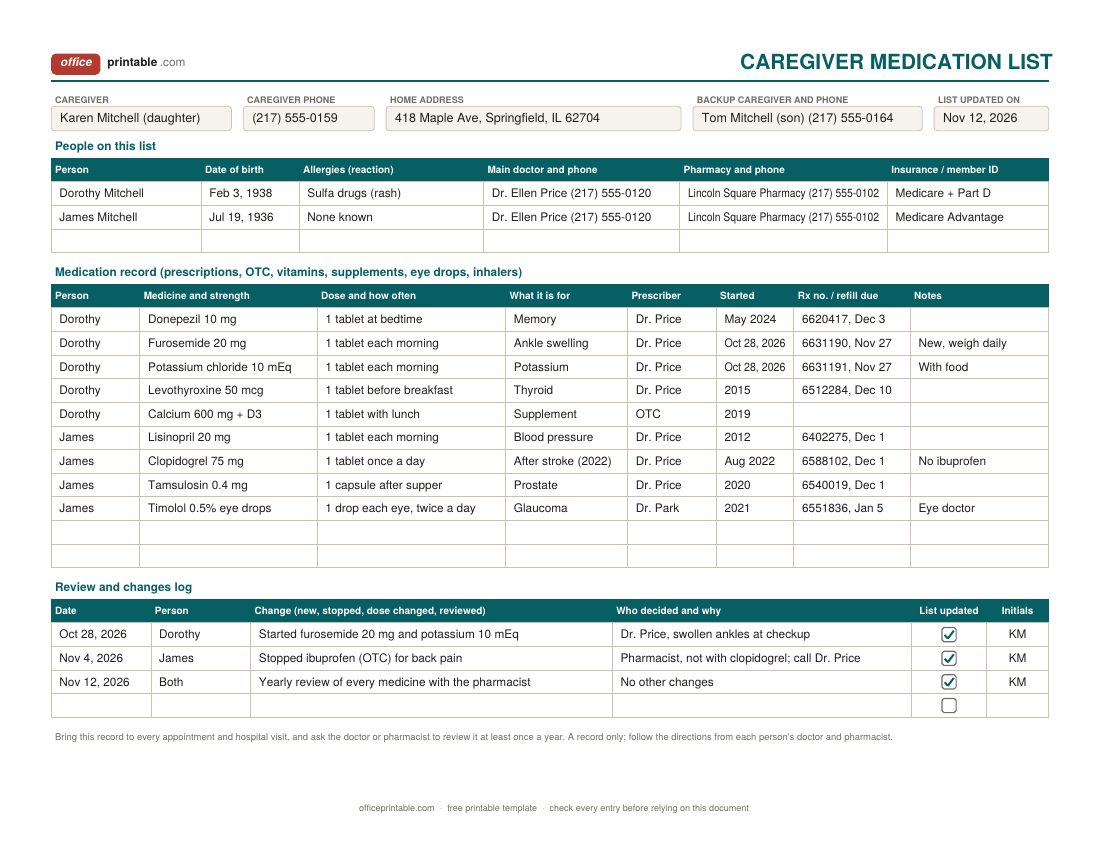
Older adults often see several doctors, and each one may only know about the medicines they prescribed. The caregiver record keeps everything for one or more people on a single sheet, with a Person column so a husband's and wife's medicines don't get mixed up. The people section at the top holds each person's allergies, main doctor, pharmacy and insurance which saves digging for cards in a hurry.
The review and changes log at the bottom does the most work over time. Every time a doctor adds, stops or changes a medicine, write the date, the change and who made it, and tick the box once the list above has been updated. When a hospital discharge sheet, a specialist and the family doctor all say slightly different things, the log shows what changed and when. Bring the record to appointments, and once or twice a year ask the main doctor or the pharmacist to go through the whole list with you and say whether each medicine is still needed. Share a copy with anyone who helps, such as a sibling, a home aide or a neighbor who has a key.
Keeping your medication record up to date
- Update the list the same day anything changes: a new prescription, a new dose, a medicine stopped, or a supplement started.
- Write the date on every copy and throw away the old ones, including the card in your wallet.
- After a hospital stay, compare the discharge papers with your list line by line and ask the pharmacist about anything that doesn't match.
- Take the list to every appointment, including the dentist, urgent care and specialists. Many offices will ask for it anyway.
- Keep one copy at home where a family member or a paramedic can find it, for example with your family emergency contact sheet on the fridge.
The FDA also suggests sharing the list with a trusted relative, friend or caregiver, especially someone who might go to appointments with you or speak for you in an emergency. If you can't answer questions yourself, they can.
Medication list or medication schedule?
They're two different documents, and many families use both. This page is the master list: what you take, why, and who prescribed it, for doctors, pharmacists and the ER. The medication schedule is about timing. It sets out which pills to take at breakfast, lunch, dinner and bedtime, and has a weekly log with a checkbox for each dose. If you keep track of appointments as well, the appointment log is a good place to write down what the doctor changed, before you copy it onto this list.
Filling in and editing the files
The PDFs are fillable. Open one in a free PDF reader, type the details, save a copy for yourself and print. The Word and Excel versions let you add rows, widen a column or change the labels; the Excel file is handy for a long list you sort by person or by doctor. For the wallet cards, print from the PDF or Word file, since the Excel version stacks the cards one under another for typing. Print at 100% scale (actual size) so the wallet cards come out the right size. This template is a record-keeping tool and is not medical advice. Check every entry against the labels, and confirm doses and instructions with your doctor or pharmacist.
Questions
What should be on a medication list?
Each medicine's name and strength, the dose, how often you take it and what it's for, plus over-the-counter medicines, vitamins and supplements. Add your allergies, doctors, pharmacy, an emergency contact and the date you last updated it.
Should vitamins and supplements go on my med list?
Yes. Doctors and pharmacists need to know about everything you take, because some supplements and over-the-counter products can interact with prescription medicines.
How often should I update my medication list?
Every time something changes: a new medicine, a different dose, or one you stopped. It also helps to have your doctor or pharmacist review the whole list once or twice a year.
Where should I keep my medication list?
Keep a copy with you, such as a card in your wallet or a photo on your phone, and one at home where family can find it. Give a copy to a caregiver or a relative you trust.
What is the best medication list for elderly parents?
One that covers every doctor's prescriptions in one place, with allergies, the pharmacy and a log of changes. The caregiver version on this page does that for one or more people on a single sheet.
Is this template medical advice?
No. It's a printable record. Always follow the directions on the label and from your doctor or pharmacist, and ask them before you start, stop or change any medicine.
Comments and questions
Have a question about this template, or an idea to make it better? Leave a comment.
Leave a comment