What is on the page
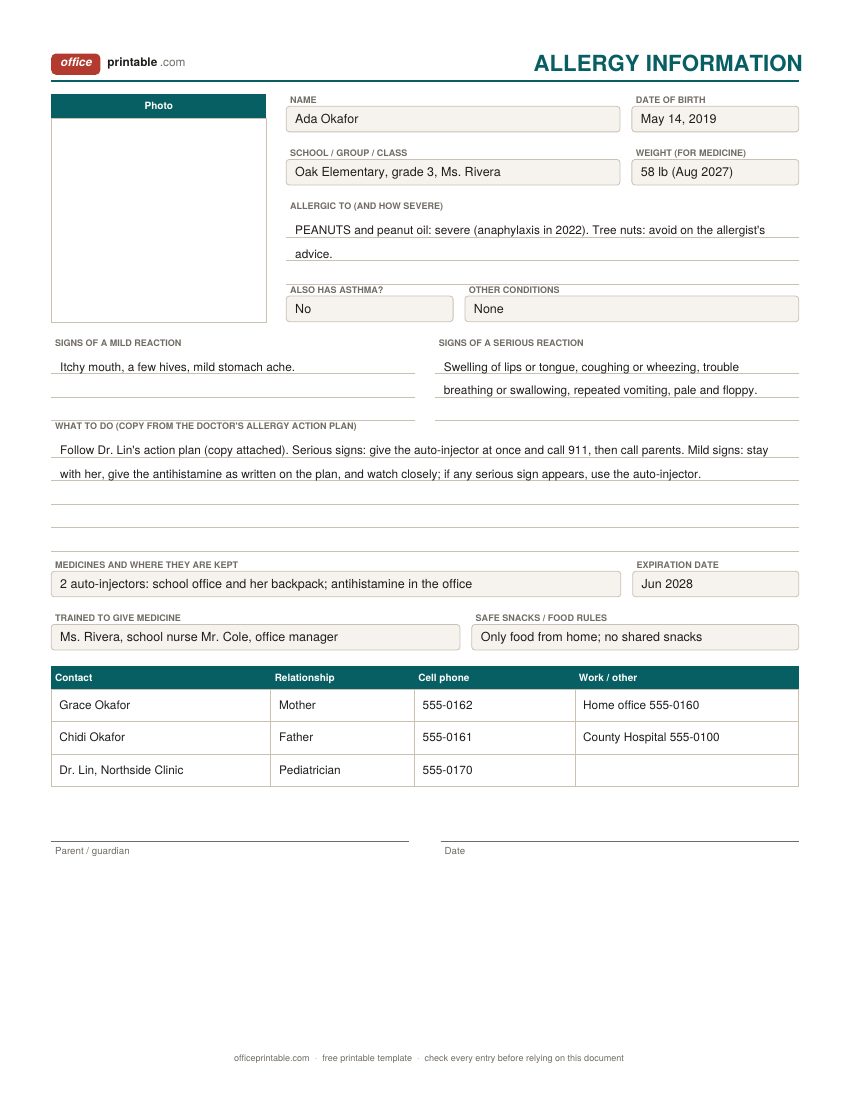
- Allergic to
- Each allergen in plain words, in capitals for the most serious, with how severe past reactions have been.
- Reaction signs
- What a mild and a serious reaction look like for this person, so others can recognize it early.
- What to do
- The steps from the doctor's written allergy action plan, copied exactly. This sheet does not replace that plan; attach it.
- Medicine and where it is
- The medicines prescribed, where they are kept, the expiration date, and who has been trained to give them.
- Weight
- Some emergency medicine doses depend on weight; the doctor sets the dose, and an up-to-date weight helps them.
Wallet allergy cards
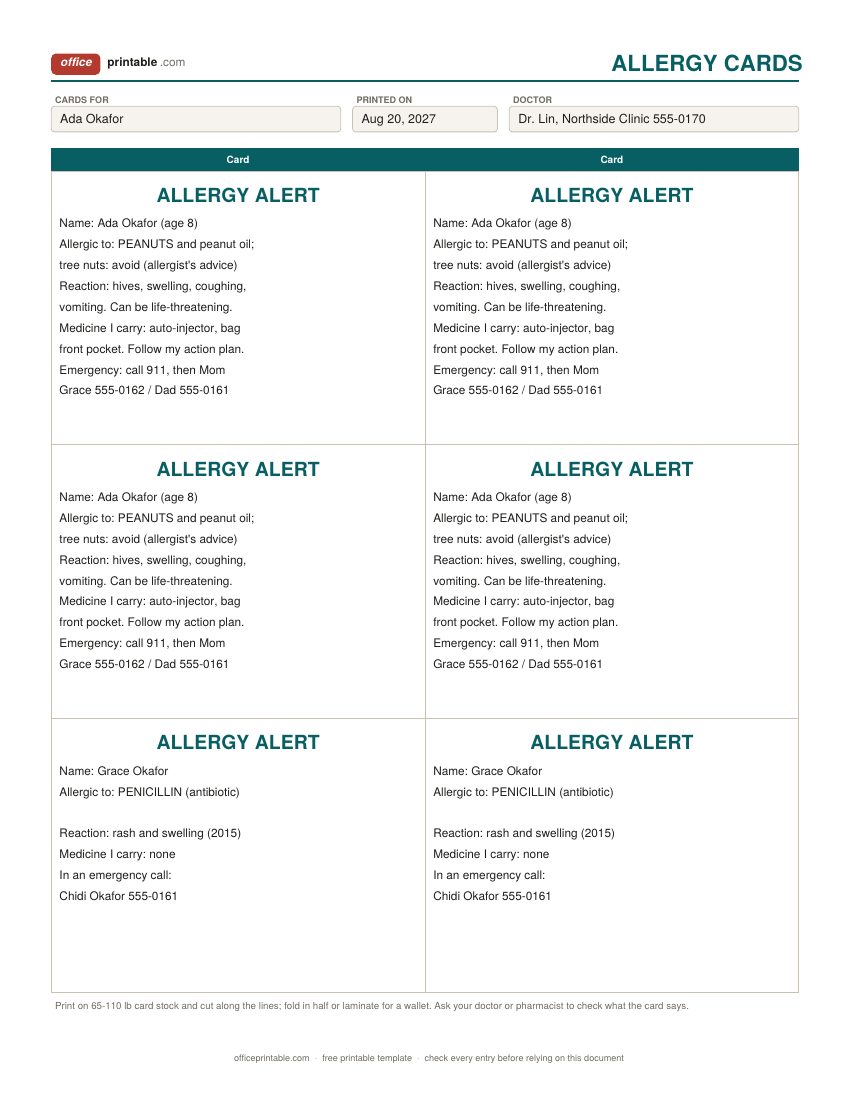
An allergy card speaks for you when you can't: after a reaction, in an accident or with someone who doesn't know you. Keep one in your wallet, one in each bag and one in the car, and put the same information in your phone's emergency medical ID which most phones can show from the lock screen. Drug allergies, such as to penicillin, belong on the card too; tell every new doctor, dentist and pharmacist. For travel, add a translated card for the language of the country you're visiting; see the travel document checklist.
Give the sheet to anyone who looks after your child: teachers, the school nurse, daycare, coaches, babysitters, camps and grandparents. Ask your child's doctor for a written allergy action plan and copy its steps exactly; the sheet is a summary, not medical advice, and the doctor's plan comes first. Include a recent photo so substitute teachers and new staff can recognize your child. Check the medicine expiration dates at the start of each school year; it's one of the jobs on the back-to-school checklist.
Eating out
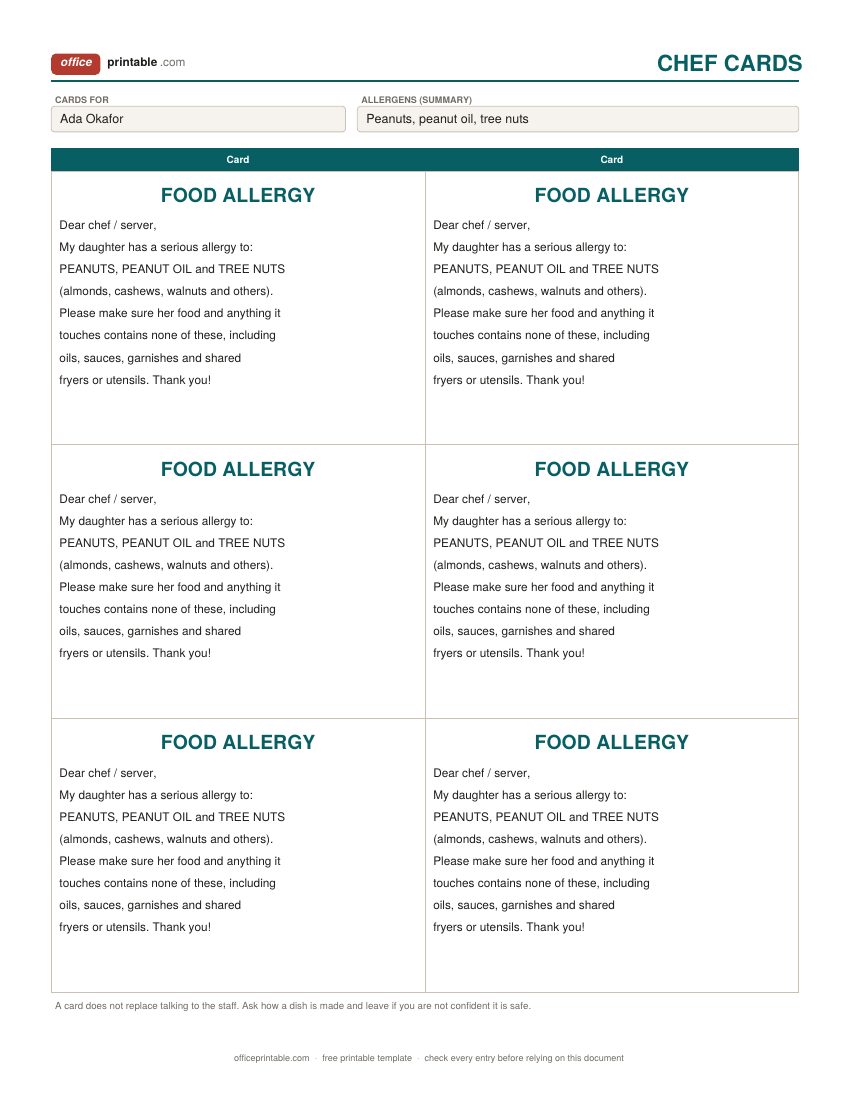
A chef card helps busy staff pass the message accurately to the kitchen. Hand it over when you order, ask how the dish is made, and mention hidden sources such as sauces, dressings, desserts and shared fryers. Card stock or a laminated card lasts longer. If staff seem unsure, it's fine to choose something else or eat elsewhere.
Editing the files
The PDFs are fillable: fill in one card, copy the text into the others, and print on card stock. The Word version lets you add a photo to the information sheet.
Questions
What should an allergy card say?
Your name, what you are allergic to, what a reaction looks like, the medicine you carry and where, and who to call in an emergency.
What is an allergy action plan?
A written plan from a doctor saying exactly what to do for mild and severe reactions, including medicine doses. Schools usually ask for one.
Should I list drug allergies on the card?
Yes. Allergies to medicines such as antibiotics are important for doctors and paramedics.
What is a chef card?
A small card handed to restaurant staff that explains your food allergy and asks the kitchen to avoid the allergen and cross-contact.
How do I print wallet-size cards?
Print on card stock at 100% scale (six cards per page), cut along the lines and laminate if you like.
Comments and questions
Have a question about this template, or an idea to make it better? Leave a comment.
Leave a comment