What is on the page
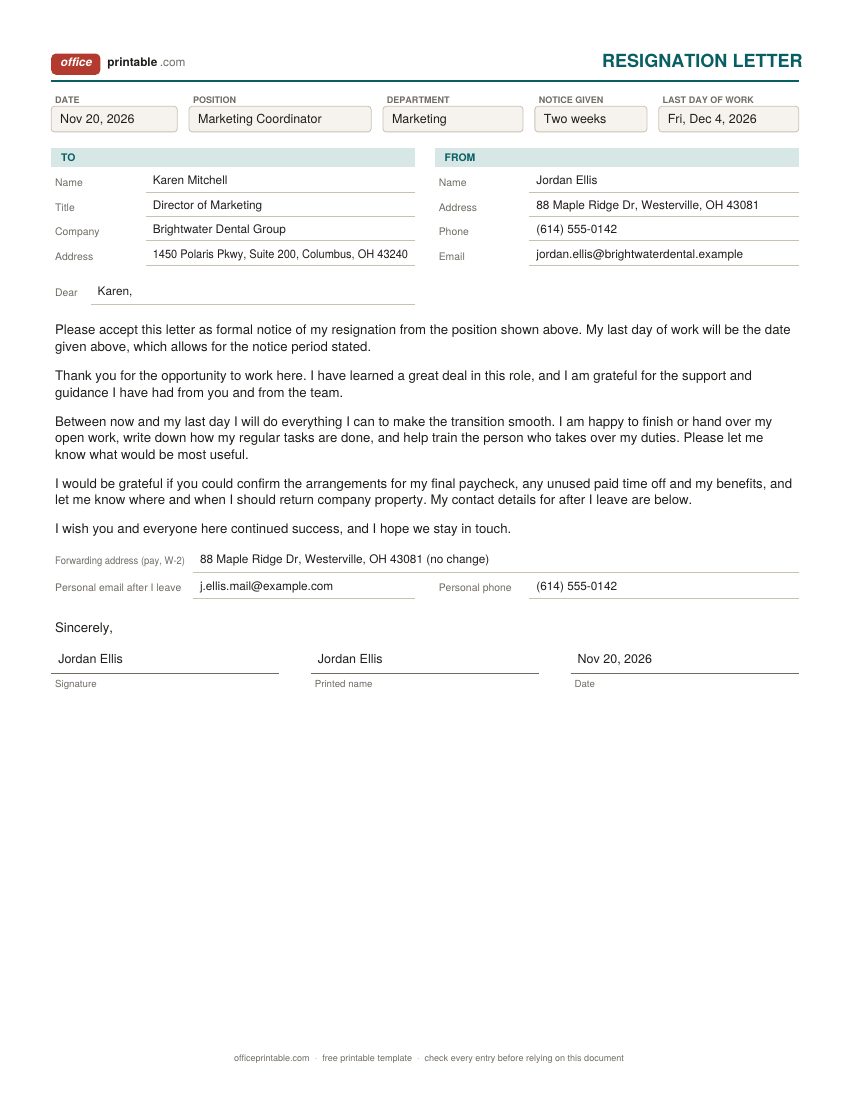
- Date
- The day you hand the letter over. Notice usually runs from this date, so it matters more than it looks.
- Position and department
- Your job title as the company records it. This makes it clear which role you are leaving if you hold more than one.
- Last day of work
- Write the actual date, including the weekday. "Two weeks from today" invites a misunderstanding about whether the last day counts.
- To and From
- Your manager's name and title and the company's address, then your own address, phone and email.
- Body text
- Finished wording you can use as it is. In the Word file every sentence can be changed or deleted.
- Forwarding address
- Where your final paycheck, if mailed, and next year's W-2 should go. Fill it in even if your address will not change.
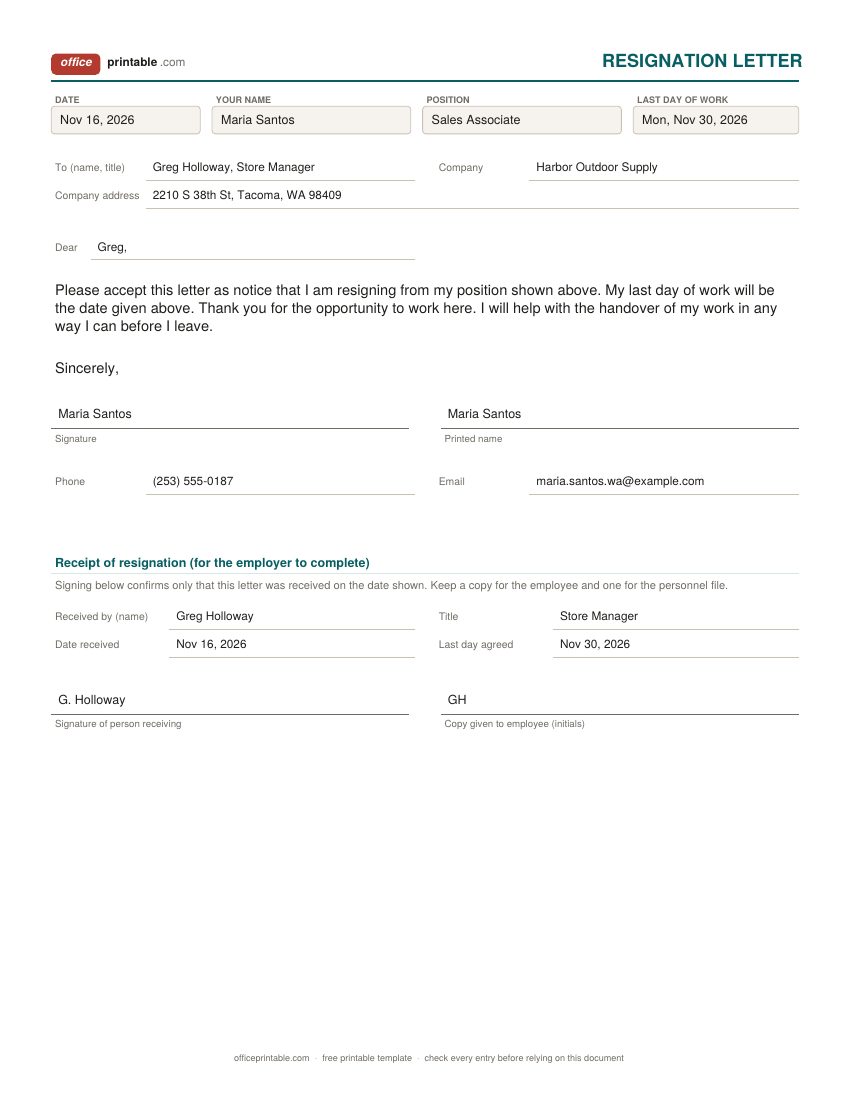
- Receipt strip
- On the short letter only. Your manager or HR signs and dates it, so you both have proof of when notice was given.
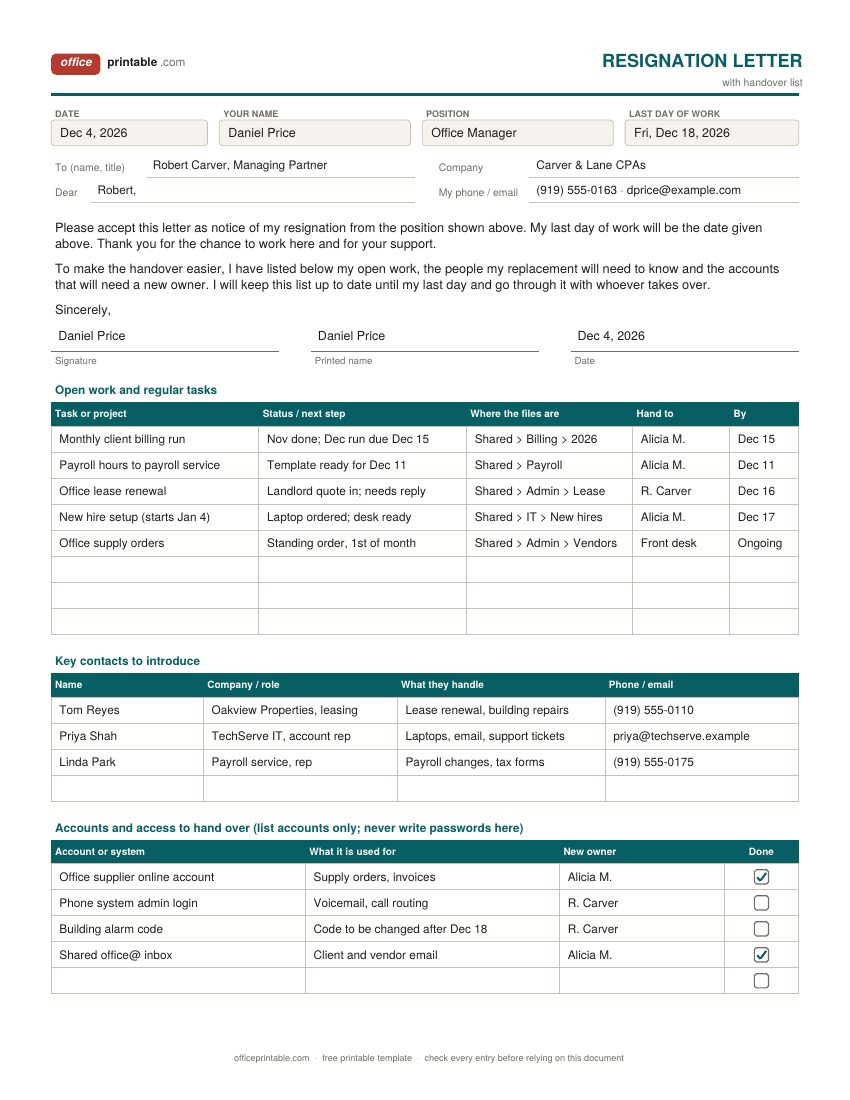
- Handover list
- On the handover design: open work, key contacts and accounts that need a new owner. Account names only, never passwords.
How to write a resignation letter with this template
- Pick your last day first. Count the notice you plan to give from the date you will hand the letter over, then check your employment contract or the employee handbook in case it asks for a different period.
- Fill in the date, your position and the last day in the boxes at the top. The body of the letter refers to them, so you never have to repeat a date in the text.
- Add your manager's name after "Dear" and fill in both addresses.
- Read the body text. If a sentence does not fit, open the Word version and change it. Keep the first two sentences, since they're the part that actually resigns.
- Print, sign and keep a copy. Hand it to your manager, then send the same letter by email so there's a dated record.
Tell your manager in person or on a call before the letter arrives if you can. Most managers take the news better when they don't first read it in their inbox.
Which resignation letter template to use
The two weeks notice letter suits most people. It's warm without gushing, it offers help with the handover and it asks the practical questions about final pay, paid time off and returning equipment, so they're on record from day one.
The short simple resignation letter is for when less is better. Maybe the job ended badly, maybe you are leaving a place you only worked for a few months, or maybe you just prefer to keep it brief. It says you're resigning, gives the last day and thanks the employer, and that's all. The receipt strip at the bottom is useful when you want proof of the date you gave notice.
The letter with a handover list fits office managers, team leads and anyone who looks after accounts, vendors or regular deadlines. Handing over the list with the letter shows good faith and gives your manager something to plan with straight away. HR can then pick up the rest of the process with the employee offboarding checklist.
Two weeks notice: custom, not law
In the US, two weeks is the usual amount of notice, but in most jobs it is a courtesy and not a legal requirement. Most American workers are employed at will which means either side can end the job at any time. No federal law requires an employee to give notice before quitting.
There are exceptions. A written employment contract, a union agreement or some company policies may set a longer period, such as three or four weeks for managers. If you signed one, follow it. Some employers also tie the payout of unused vacation to giving proper notice, where state law allows that. Check your employment contract or the handbook before you settle on a date, and ask HR if anything is unclear.
Your employer can also decide to let you go before the notice period ends. Some companies do this as a matter of policy, especially in sales or roles with access to client data. If that happens, ask if you will be paid for the rest of the notice period.
What to leave out of a resignation letter
A resignation letter usually ends up in your personnel file, and it may be read years later by someone who has never met you. Keep it short and neutral.
- Complaints about your manager, coworkers or pay. If you want to give feedback, the exit interview is the place for it.
- Details of your new job, salary or employer. You do not owe them, and they can start a counteroffer conversation you may not want.
- Promises you can't keep, such as being available after your last day.
- Anything you wouldn't want quoted back to you by a future reference check.
Final pay, PTO and benefits after you resign
Federal law doesn't require an employer to hand over the final paycheck immediately. Each state sets its own deadline. Some require payment on the last day or within a few days, while many allow it on the next regular payday. Whether unused vacation is paid out also depends on state law and on company policy, so the answer for a worker in one state may be different in another.
That's why the standard letter asks your employer to confirm these points in writing. Before you hand it in, it helps to look up your PTO balance and to check any open time-off requests you filed with a vacation request form. If your health insurance comes through work, ask when coverage ends and how to continue it. For anything specific to your state, check with your state labor department.
Before your last day
Make sure HR has your current mailing address and personal contact details on your employee information form, since tax forms are mailed after you leave. Download any personal documents you are allowed to keep, such as your own pay stubs and benefits statements, before your accounts are switched off. If you had a recent performance review, ask for a copy; it's handy when a future employer asks about your work. Return equipment, keys and badges, and get a note of what you handed back.
Questions
Do I have to give two weeks notice?
In most US jobs, no. Most employment is at will, and no federal law requires notice. It's still the normal courtesy and helps with references. A contract, union agreement or company policy can set a different period, so check yours.
Can I email my resignation letter?
Yes. Many people hand over a signed paper copy and send the same letter by email on the same day, which gives a dated record. If your company has a formal process, such as uploading it to an HR system, follow that as well.
Should I say why I am leaving?
You don't have to. A short, neutral letter is safer, because it goes into your file. If you want to explain, a single positive line such as "I have accepted a role closer to home" is enough.
What if my employer asks me to leave right away?
An employer can end the job before the notice period runs out. Ask if you will be paid for the remaining notice days and when your final paycheck will arrive, and get the answers in writing.
Can I take back a resignation letter?
Only if your employer agrees. Once notice is given, the company can accept it and start hiring. If you change your mind, speak to your manager quickly and confirm any agreement in writing.
Is this resignation letter template free to edit?
Yes. Download the Word or PDF file, change the wording to fit your situation and print as many copies as you need. Check every date and name before you sign.
Comments and questions
Have a question about this template, or an idea to make it better? Leave a comment.
Leave a comment